Catalog conversion
Turn your design system into a locked, brand-safe component catalog the model can compose from. Generated like data, safe like code.
GenUI Kit by VGV drops AI-generated, on-brand interfaces into the Flutter app you already have. Bounded zones, your design system, real data. The hard GenUI lessons, compressed into your first week.
Launching at Fluttercon USA · Orlando · July 16–17, 2026 From the team that started and leads the Flutter ecosystem.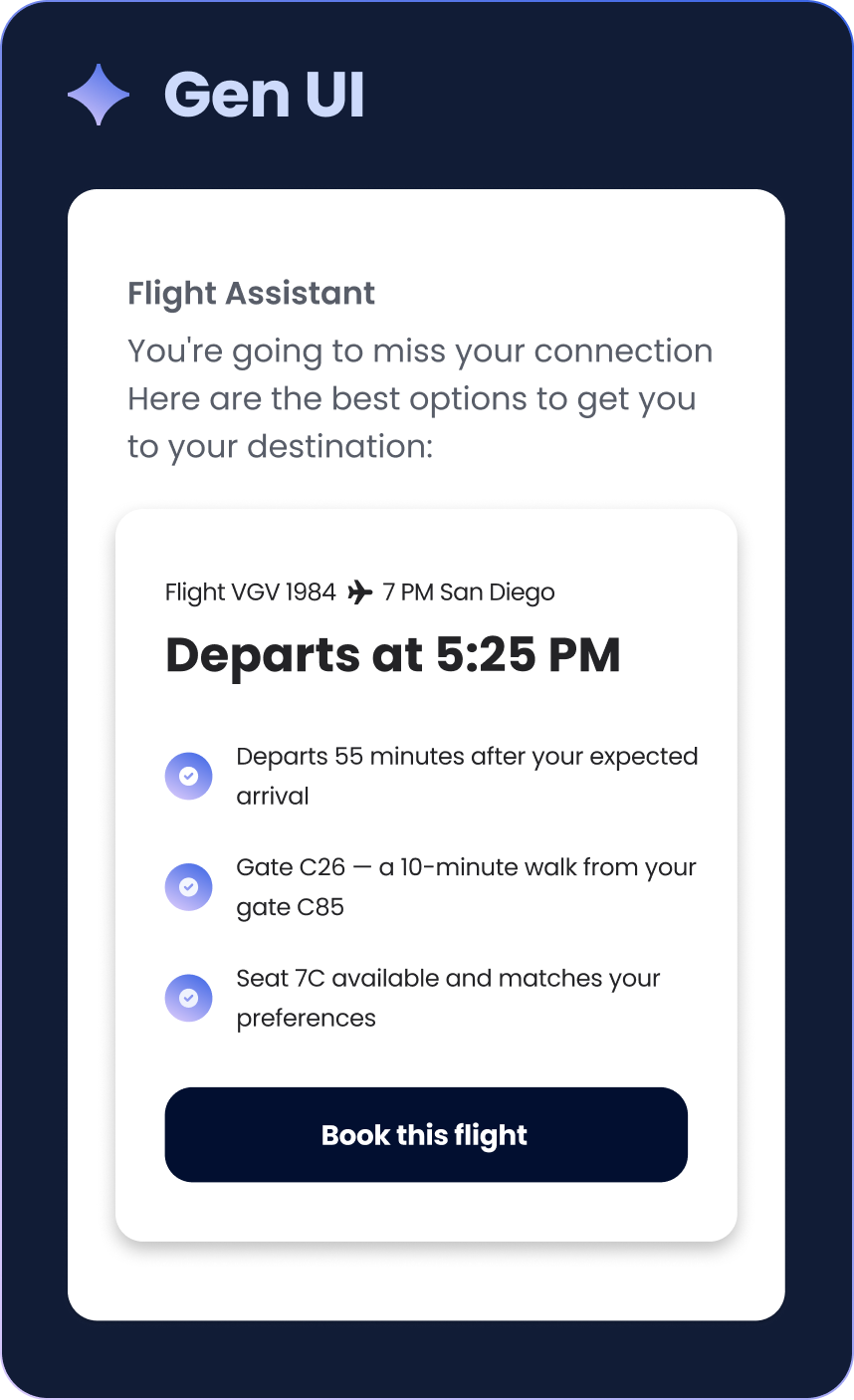
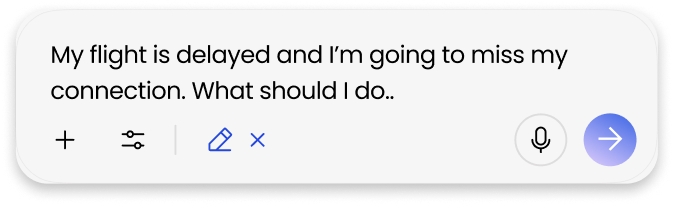
An agent that answers in paragraphs makes the user do the mapping, from what they want to the taps the UI demands. An agent that answers in UI maps itself to the task. That is the shift GenUI makes real, and the one most teams learn the hard way.
"Where's the agent that speaks in widgets rather than in text? It's the difference between me mapping what I'm trying to do to the taps required by the UI, versus the UI mapping itself to what I'm trying to accomplish."
Andrew, Flutter team at Google
GenUI Kit drops generative surfaces into controlled zones inside your existing app. A zone is a bounded place where a personalized, on-brand surface renders from your own design system and real data. The app still owns navigation, fallbacks, and rollout. GenUI owns the surface inside the zone. Customer-hosted, full source, Flutter-first.
Turn your design system into a locked, brand-safe component catalog the model can compose from. Generated like data, safe like code.
Run, inspect, and replay every generation. See exactly what the model chose, why, and what it rendered before it ships.
Wire generations to your live data and services, not mock JSON. Surfaces render from the real backend your app already runs on.
Schema validation, accessibility linting, and brand checks on every tree. Anything that fails falls back to a deterministic component.
Enterprise buyers want bounded areas with kill switches, fallbacks, and measurement. Zones give them exactly that.
The LLM never generates raw UI code. It selects components from a pre-validated catalog, which are formally assembled and rendered by the Flutter GenUI SDK over the A2UI protocol. Three inputs govern every generation.
The operational logic of the agent. Rules, tone, and constraints that align every generated surface with your brand and business intent.
Intent, preferences, and state, bound to the catalog so the model can assemble an experience tailored to the moment.
The vocabulary of the system. The approved components and patterns the agent is allowed to use, and nothing else.
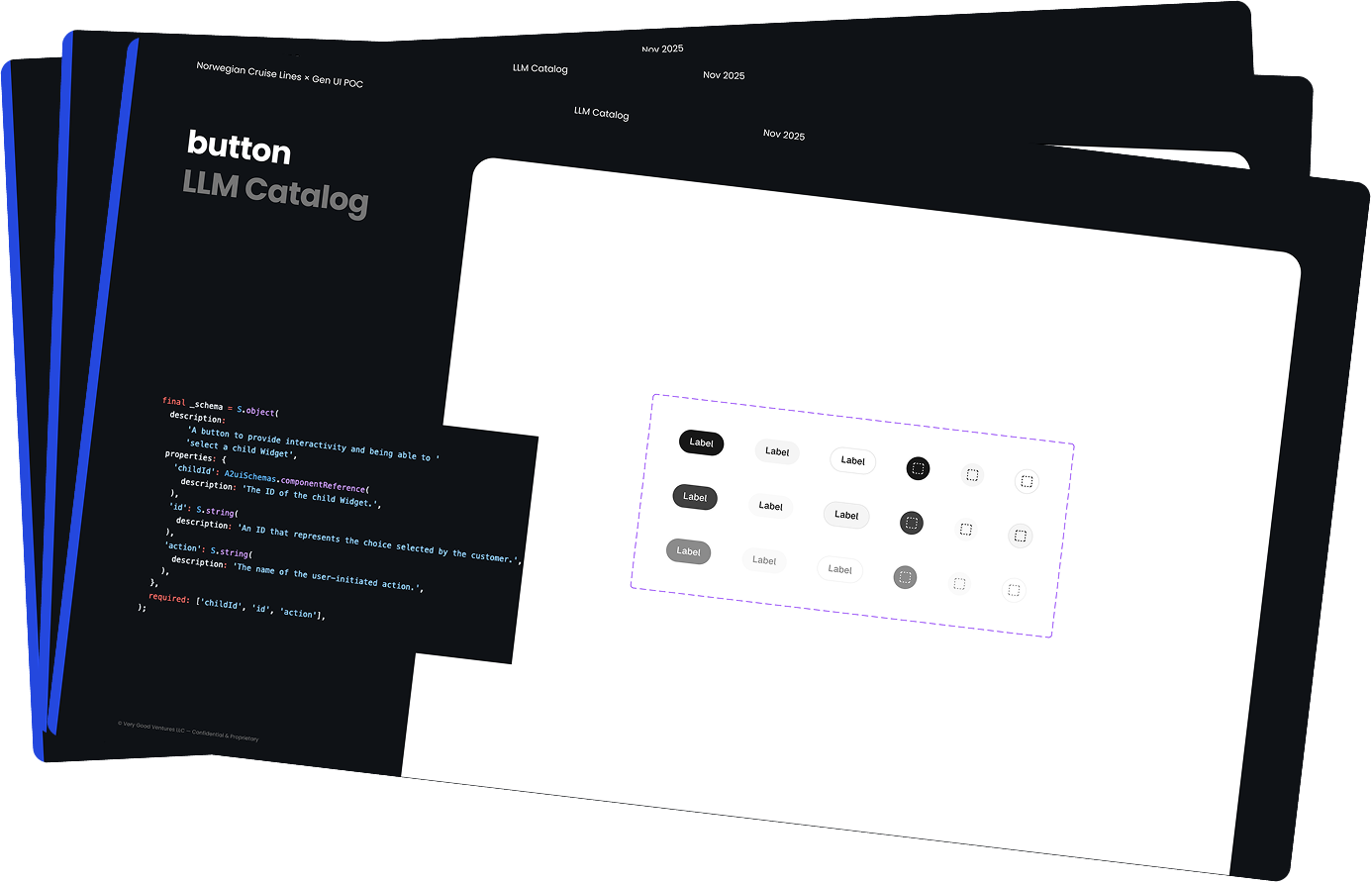
We partner with your team to define a custom Generative Design System, then build the AI-driven architecture that powers it in production. The fluidity of AI with the safety of enterprise design. One Flutter codebase renders native across mobile, web, and desktop.
Start with one high-intent surface in an app you already ship. Drop a generative zone into search, booking, or checkout, leave the rest of the app untouched, and measure the lift before you expand. Here is what that looks like across industries.
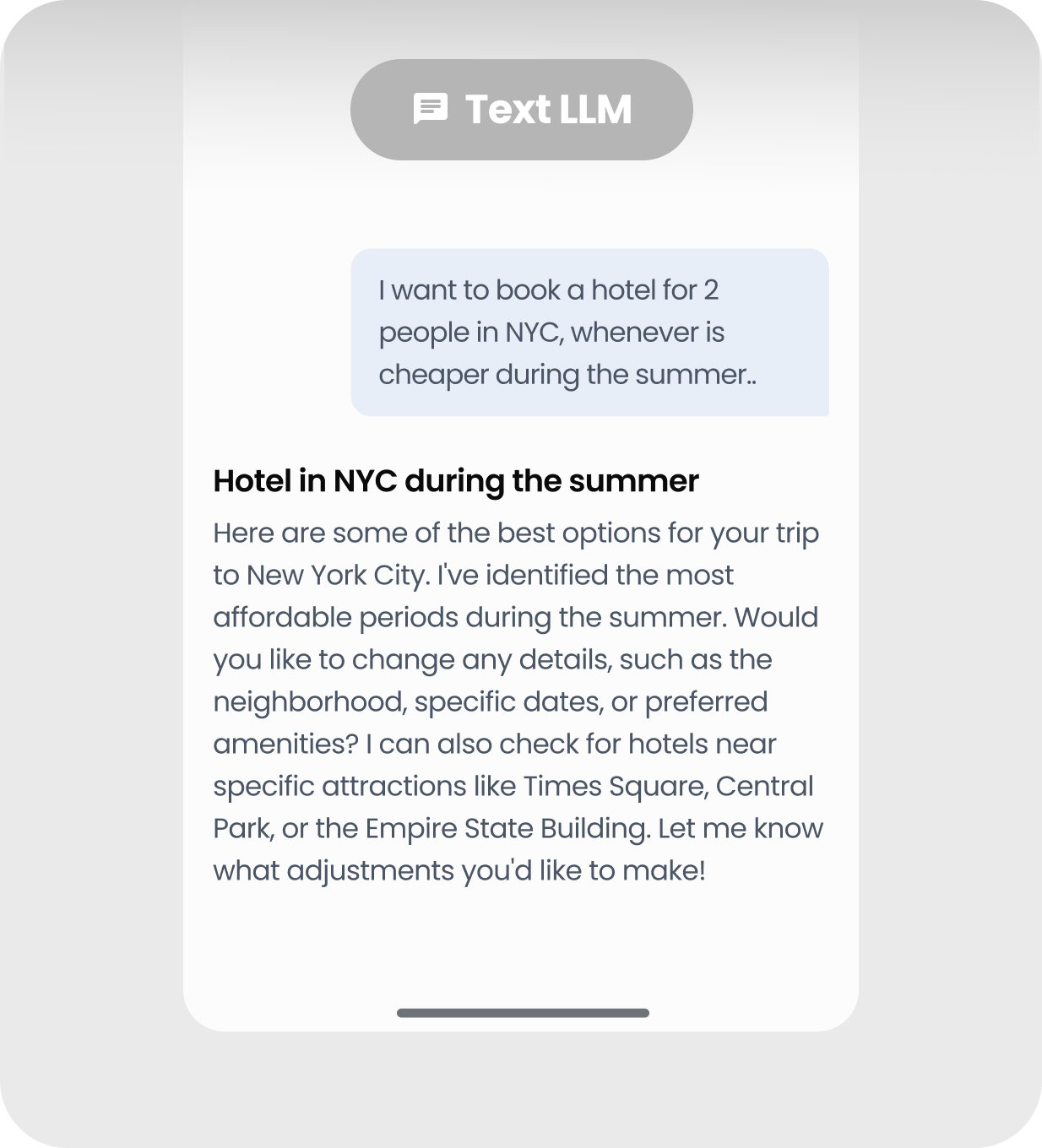
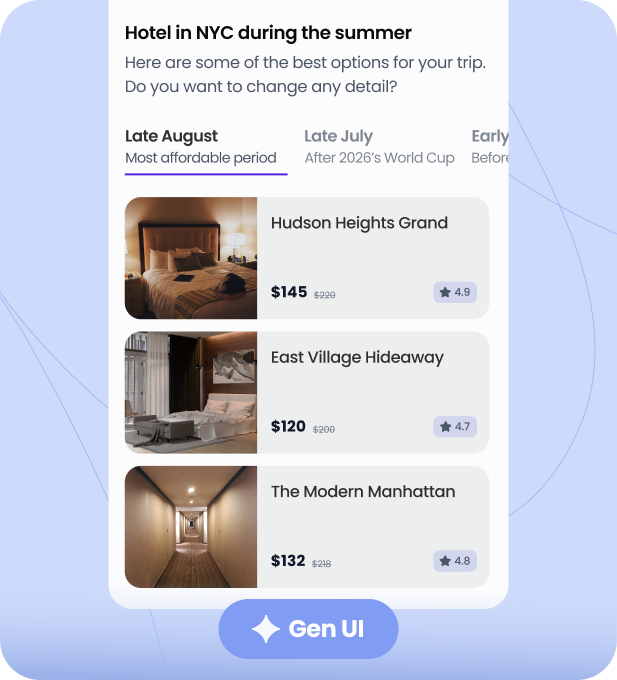
On-brand booking surfaces that adapt to traveler intent, preferences, and timing, without sacrificing design quality.
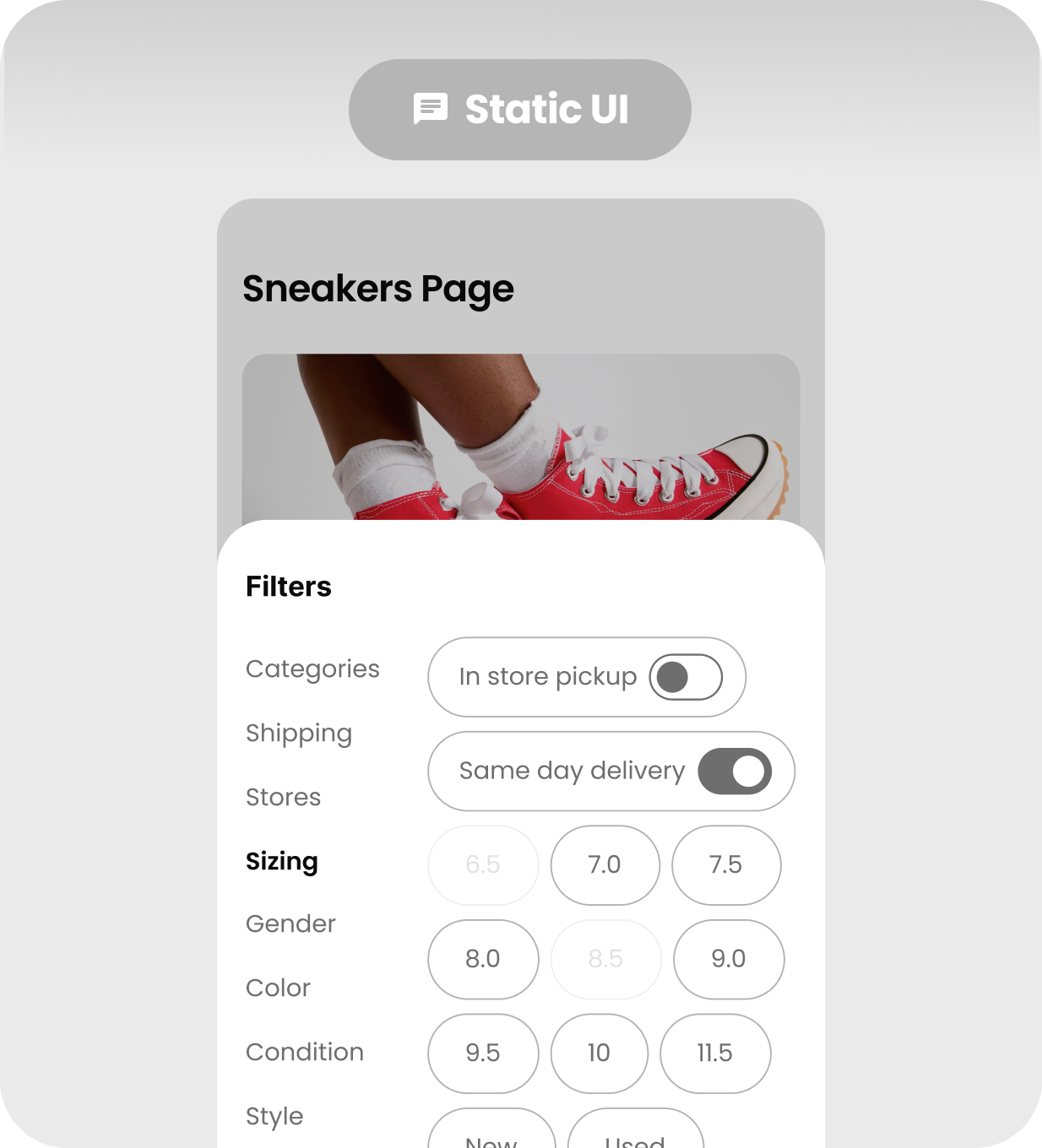
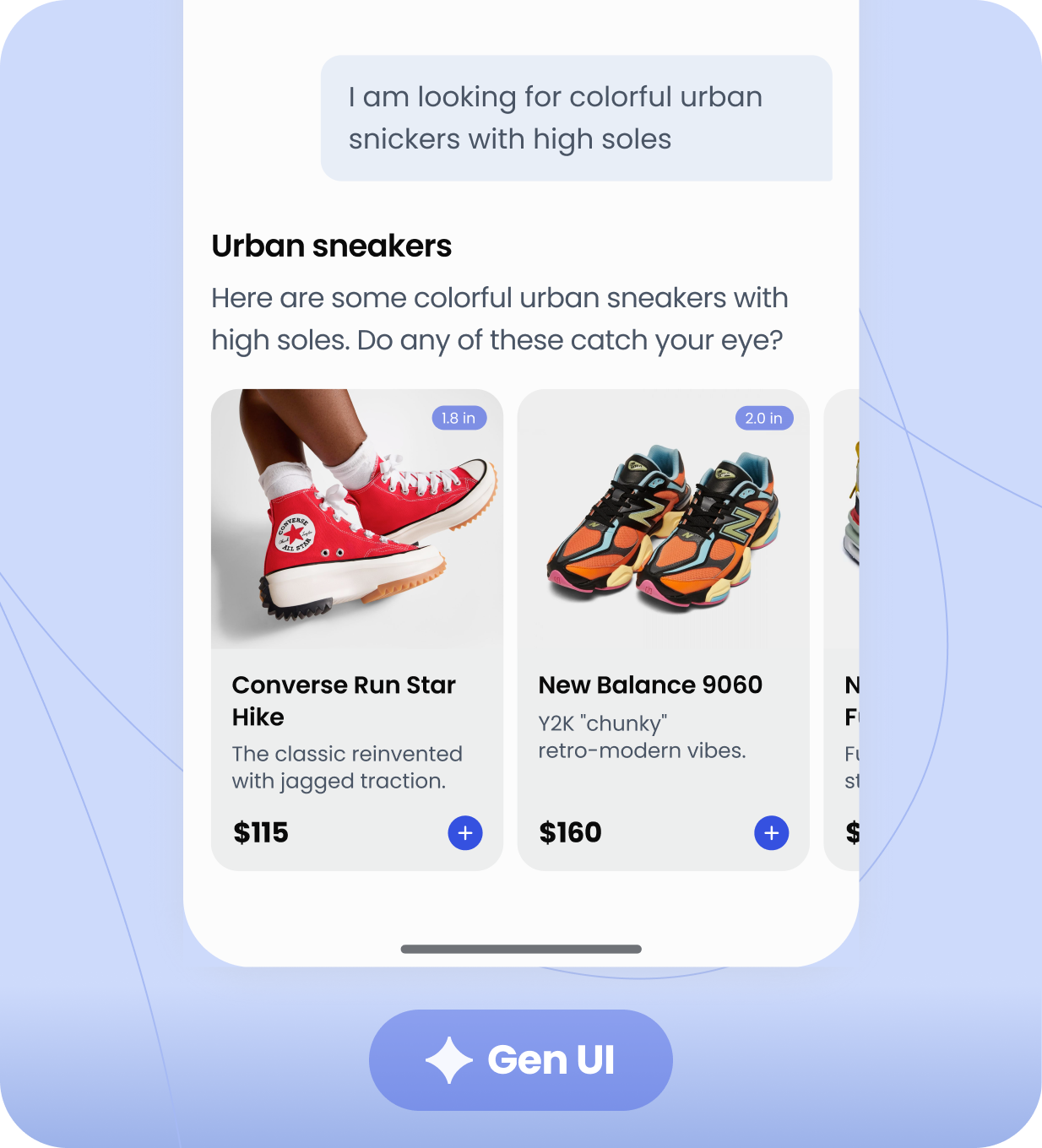
UI that replaces static filters and adapts in real time to shopper intent, surfacing the right products with less friction.
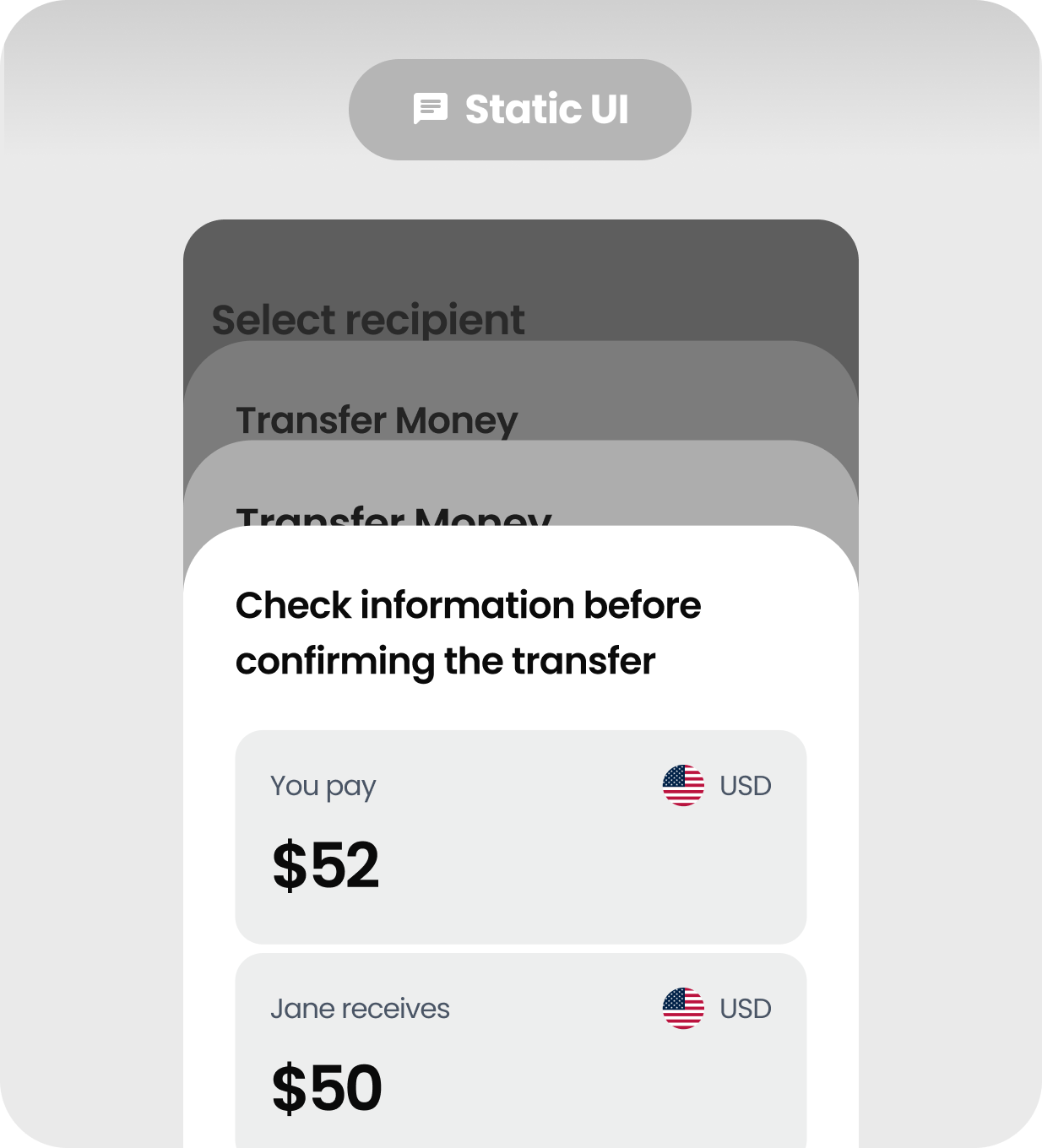
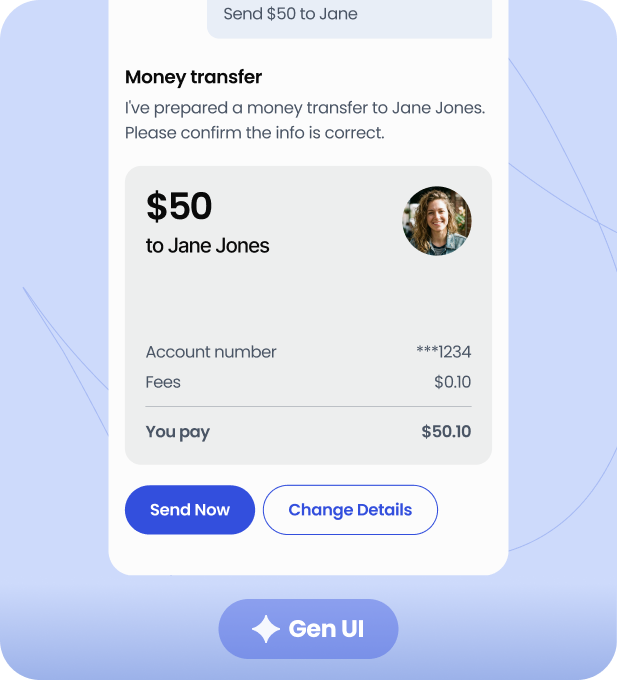
Long, multi-step tasks compressed into a single adaptive screen that keeps clarity, accuracy, and trust intact.
Interfaces are moving from hand-built at compile time to generated at runtime, shaped around each user in the moment. There are two ways in. Add generative surfaces to the app you already ship, or build a product that is GenUI-first from the very first screen.
Keep the app you already run. Drop personalized, on-brand generative surfaces into bounded zones inside it, with full control over navigation, fallbacks, and rollout. The fastest way to put GenUI in front of real users.
Build a product where the interface is composed at runtime from the first screen, with only login and a few essentials hand-built. The deepest expression of GenUI, where the experience adapts to every user.
GenUI Kit is built on work already running in production, so you start from proven patterns instead of a blank page. We have shipped generative UI for Google, including the financial services demo at Google Cloud Next and Dashy, and for large enterprises in travel, entertainment, and financial services whose work stays confidential. The lessons from those deployments are built into the kit you get.
Explore more GenUI work from VGVOrlando, July 16–17, 2026. GenUI Kit makes its public debut on the Flutter@Scale enterprise track, curated by Very Good Ventures. Join the alpha waitlist to be first in line when access opens.
Join the alpha waitlistGenUI Kit debuts publicly at Fluttercon USA, and alpha access opens to enterprise Flutter teams after the show. Tell us where you'd put a generative surface — we're already in conversation with select teams ahead of launch.
We'll be in touch as alpha access opens. See you in Orlando.